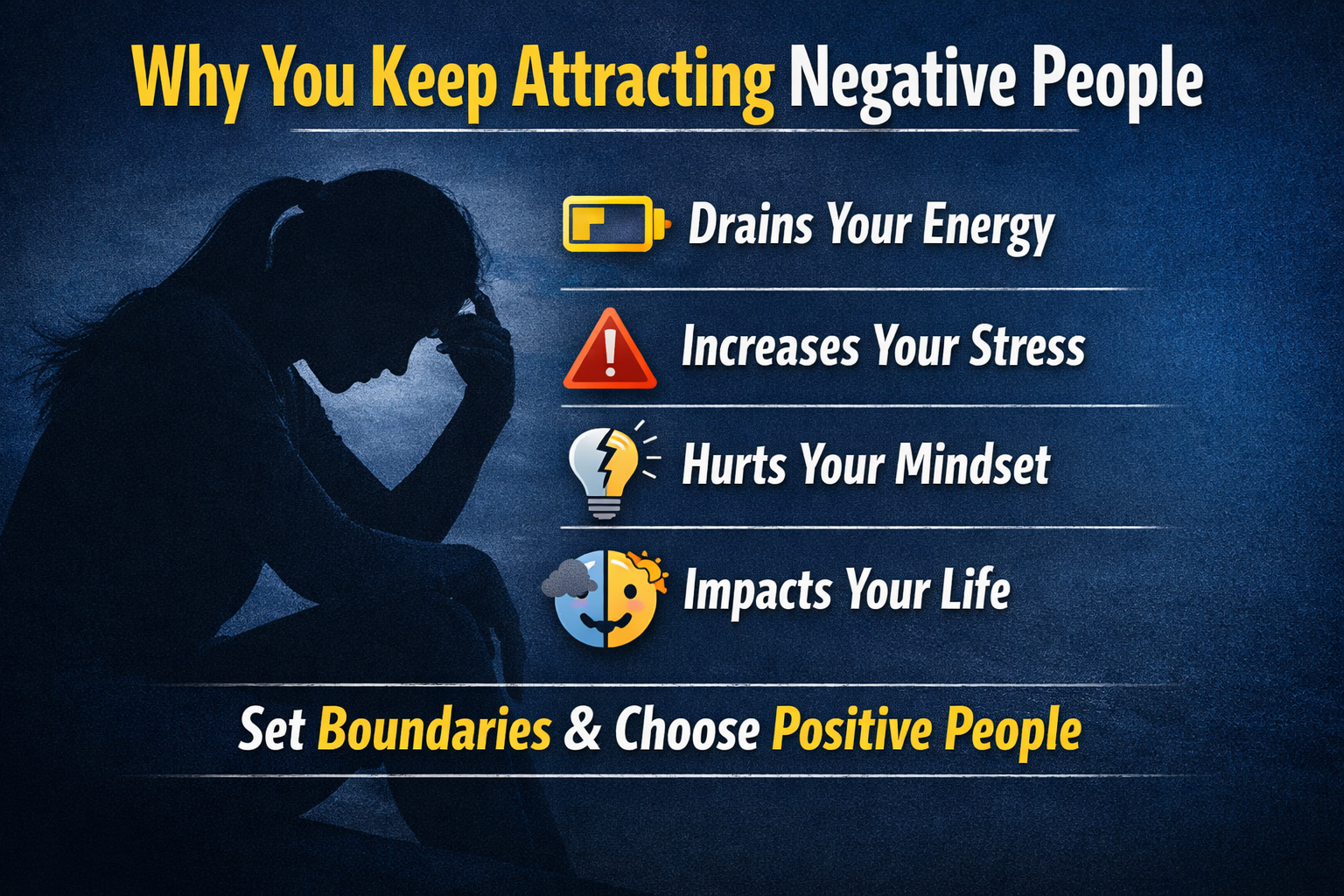
Many people experience a repeating pattern in life where they constantly attract negative people. These individuals often complain, blame others, focus on problems instead of solutions, and drain emotional energy. At first, it may seem like coincidence or just part of everyday interactions. However, over time, the impact becomes deeper and more damaging.
When negative people become a regular part of your environment, they start influencing your mood, mindset, productivity, and overall wellbeing. Understanding how this pattern affects your life is the first step toward protecting your energy and building healthier personal and professional relationships.
The hidden impact of negative people
Negativity does not usually appear suddenly. It enters slowly through daily interactions like a colleague who constantly complains about work, a friend who always focuses on problems, or someone who blames others for everything.
At the beginning, you may feel empathy. You listen, support, and try to help. But over time, absorbing this negativity affects your emotional balance.
One of the first signs is emotional exhaustion. You may feel tired after conversations, even without physical effort. This happens because emotional energy is just as important as physical energy.
As time goes on:
- Stress levels increase
- Motivation decreases
- Emotional pressure builds
Instead of focusing on growth, your mind becomes filled with negativity, worries, and frustrations that may not even belong to you.
How negative people affect your mental health
Your mental health is often the first area impacted.
For example, imagine a colleague who constantly complains about work. Every day, they talk about unfair treatment, lack of appreciation, and how nothing will improve. At first, you listen and move on. But over time, their perspective starts influencing you.
You may begin to:
- Feel frustrated at work
- Lose motivation
- Focus more on problems than opportunities
Similarly, in personal life, if a friend constantly talks about failure, distrust, and negativity, their mindset can slowly affect your emotional state.
Negativity spreads easily. Without realizing it, you may start feeling:
- Anxious
- Overwhelmed
- Emotionally drained
How it slows down your personal growth
Personal development requires a positive environment, focus, and motivation. Negative people can quietly slow down your progress.
For example, imagine you want to start a business. You share your idea, and someone responds:
- “That will never work.”
- “The market is too competitive.”
- “Most businesses fail anyway.”
Even if you were confident before, repeated negativity can create self-doubt.
Negative individuals focus on:
- Risks instead of opportunities
- Problems instead of solutions
- Fear instead of growth
Over time, this mindset can stop you from taking action and achieving your goals.
The impact on personal and professional life
Negative people affect both your personal and professional environments.
In professional life:
- Reduced productivity
- Low team morale
- Constant focus on problems
For example, a team member who criticizes everything can shift the entire team’s energy toward negativity instead of solutions.
In personal life:
- Emotional pressure
- One-sided relationships
- Feeling responsible for others’ problems
You may find yourself constantly listening, helping, and trying to fix others leading to emotional exhaustion.
How to stop attracting negative people
You cannot control others, but you can control your boundaries, energy, and environment.
1. Protect your energy and set boundaries
Not everyone deserves unlimited access to you.
If someone constantly complains or drains your energy:
- Redirect conversations toward solutions
- Limit your time with them
Example:
“I understand the situation is hard, but let’s focus on what can be improved.”
Boundaries are not rude, they are necessary for your wellbeing.
2. Stop trying to fix everyone
You are not responsible for solving everyone’s problems.
For example, if someone repeatedly shares the same issue but takes no action, you may feel stuck trying to help. This creates emotional burden.
Instead:
- Listen briefly
- Offer support without over-involvement
- Avoid carrying their emotional baggage
Support is healthy. Absorbing negativity is not.
3. Be selective with your environment
Your environment shapes your mindset.
Imagine two groups:
Group 1:
- Complains constantly
- Focuses on problems
- Criticizes everything
Group 2:
- Shares ideas
- Supports growth
- Focuses on solutions
The second group will naturally help you grow, stay motivated, and feel empowered.
Choose people who:
- Inspire you
- Support your goals
- Encourage positive action
Final thoughts: Protect your energy, protect your life
Attracting negative people does not mean something is wrong with you. It often happens because you are empathetic, kind, and supportive.
However, without boundaries, these strengths can turn into emotional exhaustion.
The goal is not to eliminate every negative person, but to:
- Protect your energy
- Set clear boundaries
- Surround yourself with growth-focused individuals
When you do this, everything changes:
- Your stress decreases
- Your mindset becomes clearer
- Your motivation increases
Most importantly, you create space for healthier relationships and personal success.
#Liightmeupagain #Liightmeupagainservices #Socialwork #NDISSupportcoordination#NDISPsychosocialrecoverycoaching #Thrivewithzakia #Personaldevelopmentcoaching #Mindsetcoaching #Publicspeaking #Resileincespeaker #Recoveryspeaker #Careerdevelopmentcoaching #Professionaldevelopmentcoaching #Leadershipcoaching #Relationshipcoaching #Consultation #Emotionaleesilience #Self-guidedprogram #NDIS #NDISTips #NDISGuide #DisabilitySupport #NDISHelp #NDISFunding #NDISExplained #NDISCommunity #NDISServices #DisabilityAustralia #SupportCoordination #NegativePeople #ToxicPeople #ProtectYourEnergy #MentalHealthAwareness #SelfGrowth #PersonalDevelopment #SetBoundaries #EmotionalWellbeing #StopNegativity #PositiveMindset #LifeAdvice #SelfImprovement #HealthyRelationships #MindsetMatters #GrowthMindset