

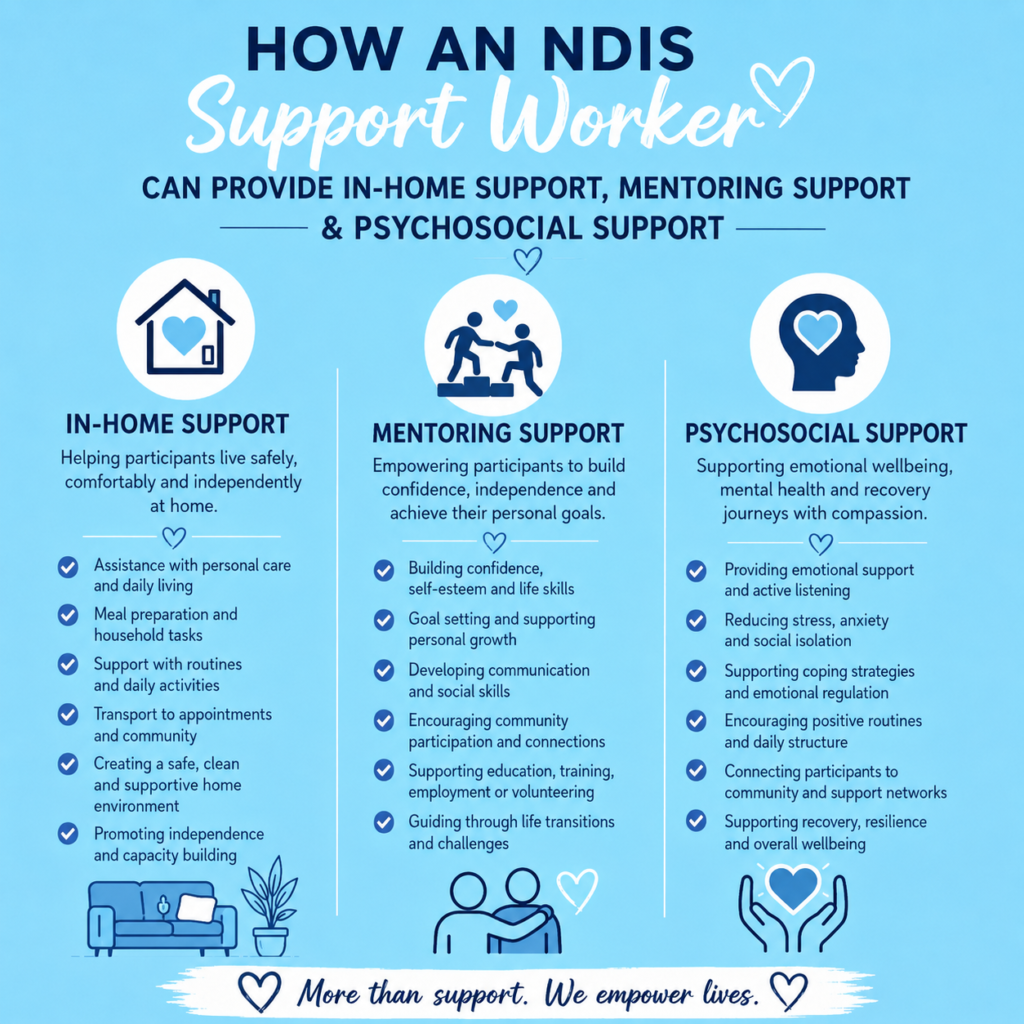
Many people think an NDIS support worker only helps with household tasks, transport, cooking, shopping, or personal care. While these supports are important, quality disability support goes far beyond daily routines.
A professional and compassionate NDIS support worker can also provide mentoring support and psychosocial support that empowers participants emotionally, socially, and mentally.
What Is Mentoring Support?
Mentoring support is about helping participants build confidence, independence, motivation, life skills, and emotional resilience.
- A support worker may mentor a participant by:
- Encouraging positive routines and healthy habits
- Supporting confidence in social situations
- Helping participants develop communication skills
- Motivating participants to achieve personal goals
- Supporting community engagement and participation
- Assisting with decision-making and problem-solving
- Helping participants build independence in daily living
Mentoring support is not about controlling someone’s life. It is about empowering participants to believe in themselves and move toward greater independence and personal growth.
What Is Psychosocial Support?
Psychosocial support focuses on emotional wellbeing, mental health recovery, social connection, and stability in everyday life.
Many participants living with psychosocial disabilities, trauma, anxiety, depression, isolation, or emotional challenges may struggle with:
- motivation,
- confidence,
- emotional regulation,
- social participation,
- maintaining routines,
- or managing daily stress.
A support worker providing psychosocial support can assist by:
- Offering emotional support and active listening
Reducing social isolation and loneliness - Supporting emotional regulation and coping strategies
- Encouraging structure, routine, and stability
- Helping participants reconnect with community and purpose
- Promoting self-worth, safety, and confidence
- Supporting recovery-focused goals
Sometimes the most powerful support is simply having someone who genuinely listens, encourages, and walks beside the participant during difficult periods of life.
Why Is This Type of Support Important?
Participants are not only looking for physical assistance. Many people also need:
- emotional encouragement,
- social connection,
- confidence building,
- guidance,
- and consistent human support.
Without psychosocial and mentoring support, participants may experience:
- social withdrawal,
- low confidence,
- emotional distress,
- reduced independence,
- loss of motivation,
- or difficulty navigating everyday life.
Support workers often become an important part of a participant’s support network because trust, consistency, and compassion can significantly improve emotional wellbeing and quality of life.
How Does This Support Work in Real Life?
This support may include:
✔ going to community activities together
✔ encouraging participants to attend appointments
✔ helping participants build social confidence
✔ supporting routines and goal tracking
✔ having meaningful conversations and emotional check-ins
✔ assisting participants during stressful or overwhelming situations
✔ motivating participants to reconnect with hobbies, education, volunteering, or employment pathways
Support is always tailored to the participant’s goals, needs, abilities, and NDIS plan.
When Should Participants Seek This Type of Support?
Participants may benefit from mentoring or psychosocial support when they:
- feel isolated or withdrawn,
- struggle with confidence,
- experience anxiety, depression, or emotional distress,
- need support navigating community life,
- want to build independence,
- are going through life transitions,
- need encouragement to achieve goals,
- or require emotional and social support alongside practical care.
More Than a Support Worker
An excellent NDIS support worker is not only task-focused. They help participants feel heard, respected, emotionally safe, empowered, connected and supported in their recovery and personal growth journey.
True support is not only about helping someone survive daily life, it is about helping them build confidence, purpose, independence, and hope for the future.
#NDIS #NDISSupportWorker #PsychosocialSupport #MentoringSupport #DisabilitySupport #MentalHealthSupport #RecoverySupport #CommunityParticipation #IndependentLiving #SupportServices #NDISAustralia #EmotionalWellbeing #RecoveryCoaching #InHomeSupport #DisabilityCare #LiightMeUpAgainServices #liightmeupagain #liightmeupagainservices #Socialwork #supportcoordination #psychosocialrecoverycoaching #thrivewithzakia #personaldevelopmentcoaching #mindsetcoaching #careerdevelopmentcoaching #publicspeaking #mentor #mentoringsupport #inhomesupport #communityengagement #ndisprovidersadelaide #leadershipcoaching #relationshipcoaching #resileincespeaker #recoveryspeaker #professionaldevelopmentcoaching #consultation #NDIS #NDISTips #NDISGuide #DisabilitySupport #NDISHelp #NDISFunding #NDISExplained #NDISCommunity #NDISServices #DisabilityAustralia