
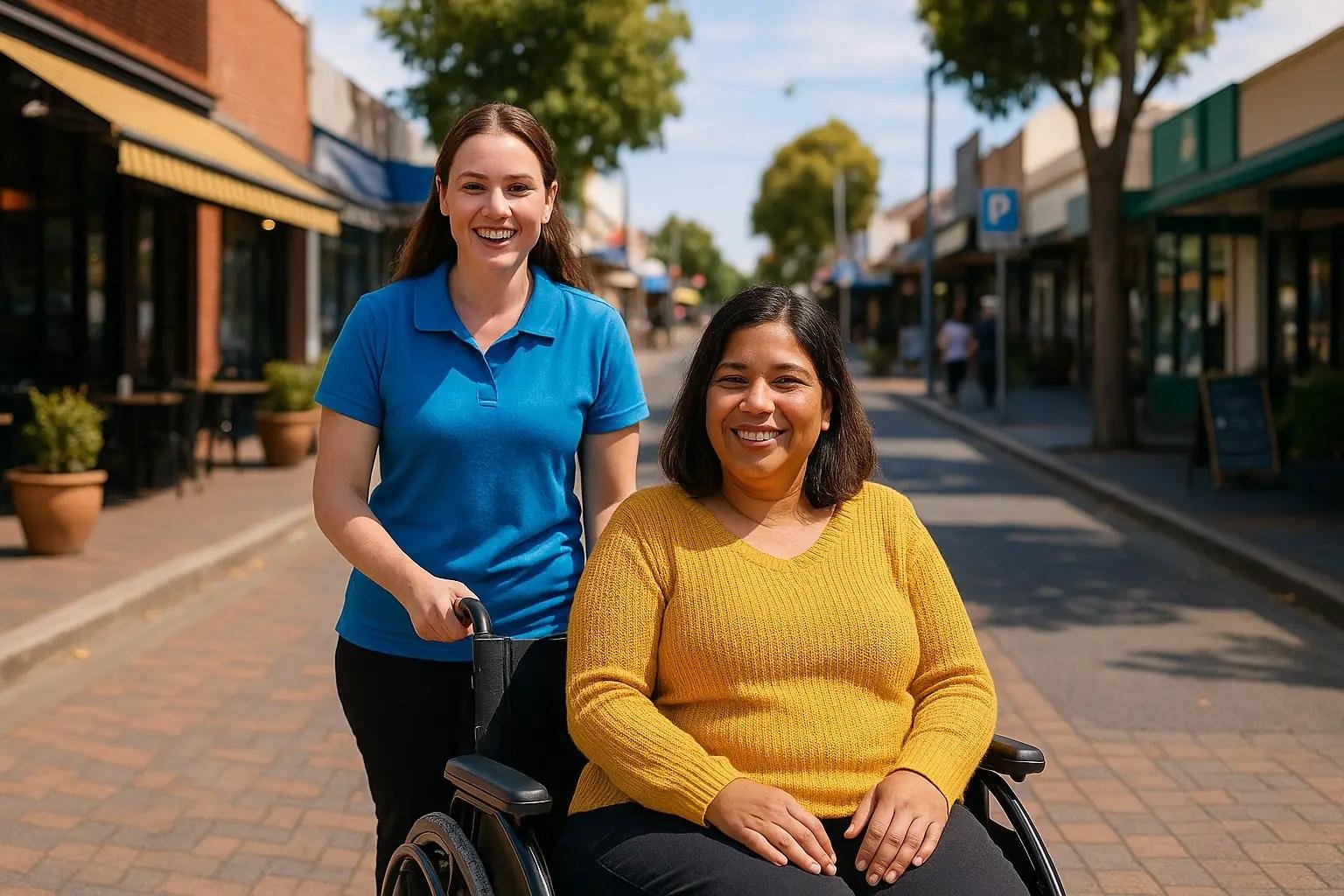

In the NDIS world, capacity building can sound like another piece of paperwork. But in real life, it can look like a cup of tea, a bus ride, a phone call and slowly learning, “I can do this myself.”
She used to wait by the door. Every Tuesday for the first three months, that’s where I found her, coat already on, bag already packed, sitting on the little bench near the entrance twenty minutes before I arrived. Not because she was excited, but because she didn’t trust that anyone else would remember to come. That isn’t necessarily something you write in a support plan. But it’s something you notice. And sometimes, what you notice is where capacity building begins.
What is capacity building?
There’s a phrase we hear constantly in the NDIS space: capacity building. It appears in funding categories, support plans, reports, goals and outcome measures. But when you hear the phrase often enough, it can start to sound like another piece of professional jargon. Strip away the terminology, though, and capacity building is actually very human. It can mean supporting someone to make their own phone call to book a medical appointment, practising public transport until catching the bus no longer feels impossible, learning how to prepare a meal, communicating their needs during an appointment, making their own choices, or gradually becoming more confident participating in their community.
The goal isn’t simply to complete a task. The goal is to support the person to develop the skills, confidence and autonomy to participate in that task themselves. And that distinction matters.
Why does capacity building matter?
Because support can unintentionally become dependence. There is a quiet, well-meaning trap in support work: doing things for people because it feels easier, faster or kinder. We might pack their bag, make the phone call, answer a question when someone speaks directly to them, complete a form because explaining it feels too difficult, or fix a problem before they have the opportunity to try. In the moment, this can look like excellent support. But if we continually do everything for someone, we can unintentionally communicate, “you need me to do this.” Capacity building asks a different question: “how can i support you to do this yourself?”
That doesn’t mean withdrawing support. It means changing the type of support. Sometimes the most valuable thing a support worker can do is simply sit beside someone and allow them to try, even when it takes longer, even when they make mistakes, and even when it would be much easier for us to step in.
When does capacity building happen?
Capacity building doesn’t only happen during a formal support session. It happens in ordinary moments of everyday life. It can happen when someone makes their own cup of tea, chooses what they want to eat, calls a service provider, uses public transport, writes a shopping list, speaks for themselves at an appointment, asks a neighbour for help, makes a decision, or tries again after something didn’t work the first time. These moments can look incredibly small from the outside. But for the person experiencing them, they can represent something much bigger: “I can do this.”
And this is where capacity building becomes more than a concept. It becomes something we can actually see happening in someone’s life.
What does it look like in practice?
Let’s go back to the woman sitting by the door. We didn’t begin with a grand goal. We began with something very simple. She wanted to make her own cup of tea. At first, I sat close by. Then I moved to the table. Then I stopped giving instructions unless she asked. Eventually, she made the tea independently. Three months later, she was making her own cup of tea. Six months later, she invited a neighbour in for one. Eight months later, she stopped waiting by the door.
Something had changed. Not just the tea. Her relationship with her own ability had changed. She had started to trust herself. That’s what capacity building can look like. It isn’t always a dramatic transformation. Sometimes it is a series of tiny moments that gradually create a much bigger change.
Where does capacity building happen?
It happens wherever life happens. At home. In the community. At the supermarket. At the bus stop. At a medical appointment. In a café. At work. During a phone call. Sometimes it happens in places that would never appear in an NDIS progress report. And that’s important to remember, because capacity isn’t something that exists only inside a support session.
The purpose of building capacity is to help people use their skills in real life.
The real measure of progress may not be what someone can do while their support worker is standing beside them. It may be what they gradually become comfortable doing when that support becomes less necessary. And that leads to one of the hardest parts of capacity building: knowing when to step back.
The hardest part: knowing when to step back
This may be one of the most difficult parts of support work. Sometimes we have to tolerate the discomfort of watching someone struggle. They might take four minutes to work out the microwave. They might hesitate before making a phone call. They might forget something. They might make a mistake. Our instinct can be: “Let me do it.”
But capacity building sometimes requires us to pause and ask: “Would you like some help, or would you like to try first?” That small question can create space for choice, autonomy and learning. Of course, stepping back doesn’t mean abandoning someone to figure everything out alone.
Capacity building is not about doing less care
There is an important distinction here. Capacity building doesn’t mean providing less care. It means providing the right level of support at the right time. Sometimes a person needs full assistance. Sometimes they need prompting. Sometimes they need someone beside them. Sometimes they only need encouragement. And sometimes they are ready for us to step back.
Good support adapts to the person. Because the goal isn’t to make someone independent simply for the sake of using the word independent. The goal is to support greater choice, confidence, participation and autonomy where possible and meaningful to that person.
That’s why the small wins matter. From the outside, a cup of tea may seem like just a cup of tea. A bus ride may seem like just a bus ride, and a phone call may seem like just a phone call. But when someone has spent years believing they cannot do these things independently, each achievement can represent something much bigger. Progress doesn’t always begin with a huge milestone. Sometimes it begins with “I tried.” Then: “I did it with help.” Then: “I did it with prompting.” And eventually: “I did it myself.”
Each stage matters. Capacity building is about seeing the person behind the goal, understanding where they are starting from, identifying what matters to them, building on their strengths, creating opportunities to practise, celebrating progress, and knowing when to step forward and when to step back.
The small wins are the bigger story
Capacity building isn’t always fast, and it isn’t always linear. There will be difficult days, setbacks and periods when progress seems invisible. But beneath the reports, reviews and funding categories, something powerful can be happening. A person is beginning to trust themselves again.
Perhaps that’s what capacity building really means: not doing everything for someone, and not leaving someone to do everything alone, but walking alongside them until they can confidently say, “I can do this.” That’s not a buzzword. That’s capacity. That’s confidence. That’s a life being rebuilt, one small, ordinary, quietly extraordinary step at a time.