

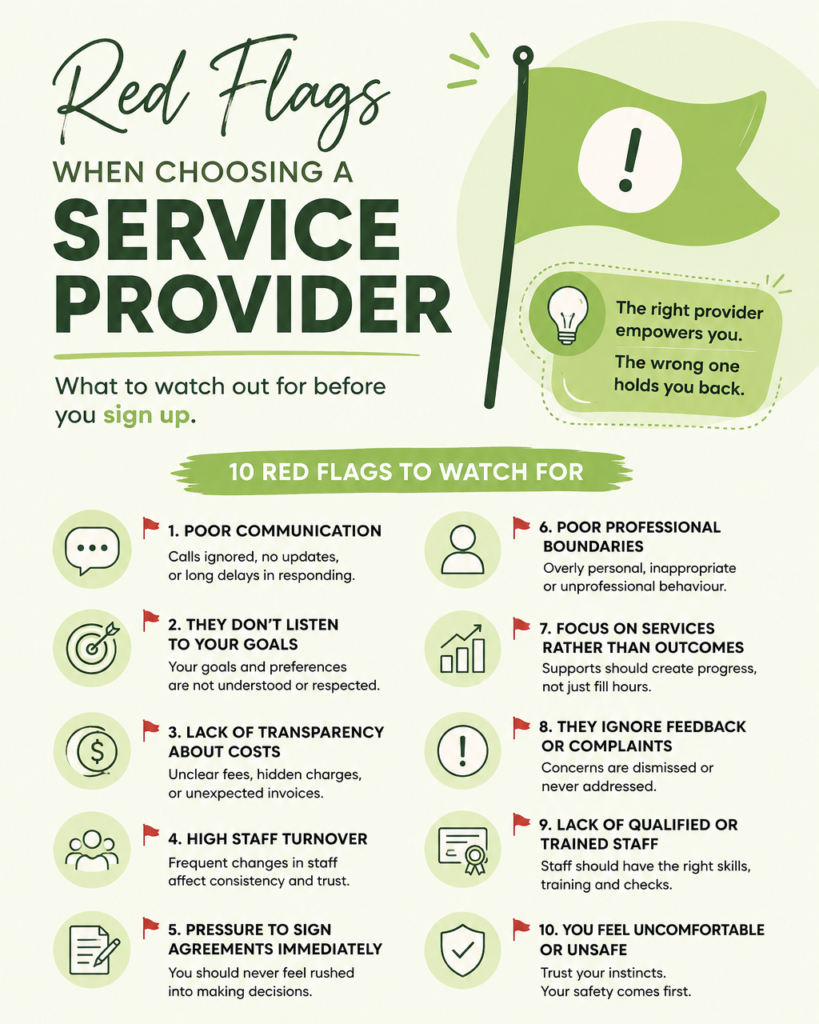
Choosing the right service provider can make a significant difference in your quality of life, wellbeing, and overall experience. Whether you’re accessing NDIS supports, community services, coaching, therapy, or disability supports, the provider you choose should empower you, respect your choices, and help you achieve your goals. Unfortunately, not all service providers deliver the same level of care, professionalism, or accountability. Understanding the warning signs can help you make informed decisions and avoid unnecessary stress, disappointment, or poor outcomes.
What are Red Flags?
Red flags are warning signs that may indicate a service provider is not operating in a professional, ethical, or participant-focused manner.
While one issue alone may not always be a deal-breaker, multiple red flags should encourage you to ask questions and carefully consider whether the provider is the right fit for your needs.
Why is choosing the right provider important?
Your service provider may become an important part of your support network.
They may assist with:
- Daily living activities
- Community participation
- Mental health recovery
- Therapy supports
- Support coordination
- Personal development
- Building independence
The right provider can help you thrive.
The wrong provider can leave you feeling unheard, unsupported, frustrated, or even unsafe.
When should you be concerned?
It’s important to pay attention to concerns early rather than waiting until problems escalate.
If something doesn’t feel right during the initial conversations, onboarding process, or first few weeks of support, trust your instincts and ask questions.
You have the right to:
- Be treated with dignity and respect.
- Have choice and control.
- Receive safe and quality supports.
- Change providers if your needs are not being met.
10 Red Flags when choosing a Service Provider
🚩 1. Poor communication
Communication is the foundation of quality support.
Red flags include:
- Calls and emails regularly ignored.
- Long delays in responding.
- Lack of updates regarding services.
- Difficulty contacting staff.
Example:
You leave multiple messages over several weeks and receive no response, even when the matter is urgent. Reliable providers communicate clearly, respectfully, and promptly.
🚩 2. They don’t listen to your goals
Support should be person-centred.
A provider should take time to understand:
- Your goals
- Your preferences
- Your strengths
- Your support needs
Example:
You explain that your goal is employment, but all supports are focused on activities that don’t align with your objectives. Good providers work with you, not for you.
🚩 3. Lack of transparency about costs
You should always understand:
- Service rates
- Travel charges
- Cancellation fees
- Service agreement terms
Example:
Unexpected invoices appear without prior discussion or explanation. Transparency builds trust.
🚩 4. High staff turnover
Frequent changes in workers can impact trust, consistency, and outcomes.
Example:
You have had four different support workers in three months and must repeatedly explain your needs. Consistency is often essential for building positive support relationships.
🚩 5. Pressure to sign agreements immediately
You should never feel rushed into making decisions.
Example:
A provider pushes you to sign paperwork immediately without giving you time to read and understand the agreement. Professional providers encourage informed decision-making.
🚩 6. Poor professional boundaries
Support workers and providers should maintain professional relationships.
Examples include:
- Sharing excessive personal information.
- Becoming overly involved in personal matters.
- Creating dependency rather than independence.
Healthy boundaries protect everyone involved.
🚩 7. They focus on services rather than outcomes
A quality provider focuses on helping you achieve meaningful goals.
Example:
The provider delivers hours of support each week but cannot explain how the supports are improving your independence, wellbeing, or quality of life. Supports should create progress, not simply fill hours.
🚩 8. They ignore feedback or complaints
Every organisation receives feedback.
The difference is how they respond.
Example:
You raise concerns several times but receive no acknowledgement or action. Good providers view feedback as an opportunity to improve.
🚩 9. Lack of qualified or trained staff
Workers should have appropriate qualifications, training, and compliance requirements.
This may include:
- NDIS Worker Screening Check
- First Aid and CPR
- Relevant disability experience
- Ongoing professional development
Participants have the right to ask about staff qualifications and training.
🚩 10. You feel uncomfortable or unsafe
This may be the most important red flag of all.
If you consistently feel:
- Disrespected
- Dismissed
- Uncomfortable
- Unsafe
- Pressured
It may be time to reconsider whether the provider is the right fit.
Trust your instincts.
How can you choose the right provider?
Before engaging a provider, consider asking:
How do you support participant choice and control?
How do you communicate with participants and families?
What experience do your staff have?
What happens if I am unhappy with a service?
How do you measure participant outcomes?
Can I review your service agreement before signing?
A quality provider will welcome these questions.
Final Thoughts
Choosing a service provider is an important decision. The best providers are not simply delivering a service, they are building relationships, supporting growth, promoting independence, and helping people achieve meaningful outcomes.
A good provider makes you feel respected. A great provider makes you feel heard, valued, understood, and empowered.
Never be afraid to ask questions, seek clarification, or advocate for your needs. You deserve supports that align with your goals and help you live the life you choose.
#liightmeupagain #liightmeupagainservices #Socialwork #supportcoordination #psychosocialrecoverycoaching #thrivewithzakia #personaldevelopmentcoaching #mindsetcoaching #careerdevelopmentcoaching #publicspeaking #mentor #mentoringsupport #inhomesupport #communityengagement #ndisprovidersadelaide #leadershipcoaching #relationshipcoaching #resileincespeaker #recoveryspeaker #professionaldevelopmentcoaching #consultation #NDIS #NDISTips #NDISGuide #DisabilitySupport #NDISHelp #NDISFunding #NDISExplained #NDISCommunity #NDISServices #DisabilityAustralia