We all carry stories within us.
Some are stories of love, joy, and connection.
Others are stories of pain — often silent, often buried.
But even when we don’t speak them, trauma finds a way to speak through us.
In Luke Hawkins’ powerful trauma training, I learned a framework that made everything click:
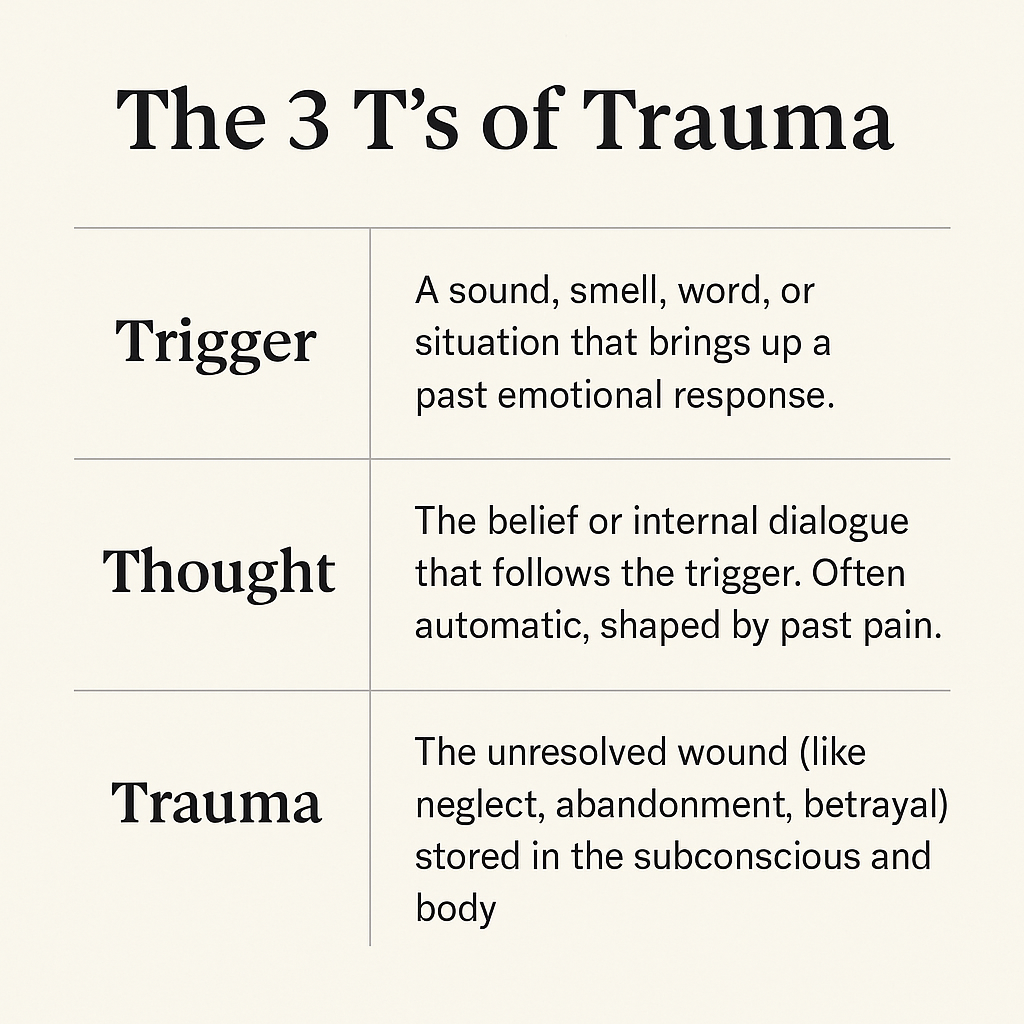
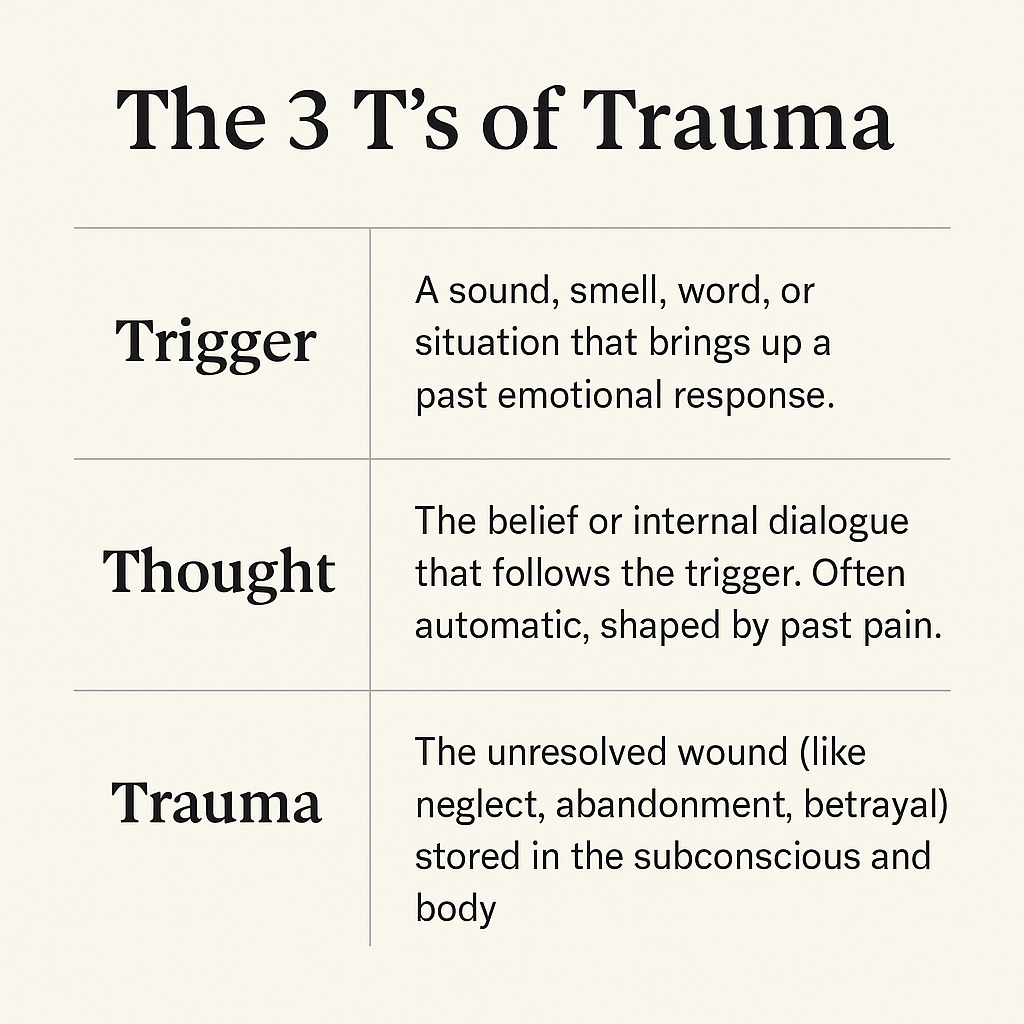
The 3 T’s of Trauma — Trigger, Thought, and Trauma.
This simple trio helps explain how our nervous system keeps us looping in emotional pain — and how we can begin to interrupt that loop.
1. Trigger: The Doorway to the Past
A trigger is any external or internal cue that stirs an emotional memory.
🔸 A tone of voice that sounds just like your angry parent.
🔸 A smell that reminds you of a hospital room.
🔸 A glance that feels like rejection.
🔸 A certain date, a silence, a song.
You’re no longer in that past experience, but your nervous system doesn’t know the difference.
Triggers are like emotional buttons — wired to memories we haven’t fully processed.
2. Thought: The Story You Tell Yourself
Right after the trigger comes a thought.
It’s automatic. Subconscious. And deeply personal.
🔸 “I’m not safe.”
🔸 “This always happens to me.”
🔸 “I must have done something wrong.”
🔸 “I’ll never be loved.”
These thoughts are not facts.
They’re inner echoes from unresolved experiences — often shaped by early life wounds.
But when repeated enough, they start to feel true. They become the lens through which we see ourselves and others.
Trauma: The Unseen Wound Beneath It All
Underneath the trigger and the thought lives the deeper trauma — the emotional injury that was never witnessed, never validated, never healed.
It could be:
- Childhood neglect
- Abandonment or betrayal
- Emotional suppression
- Loss or shame
- A single moment… or years of subtle disconnection
Trauma lives in the subconscious mind and the body.
That’s why even decades later, something small can create a wave of emotion you didn’t expect.
Your body remembers what your mind tried to forget.
Why This Matters
Understanding the 3 T’s helps us break the cycle.
When you notice:
- “I’m feeling triggered.”
- “This thought isn’t the truth — it’s a trauma response.”
- “This pain belongs to a part of me that needs care, not judgment.”
…you move from reaction to awareness.
That’s where healing begins.
At the end “You Are Not Broken”
If you’ve ever wondered “Why do I react this way?”, know this:
You’re not too sensitive.
You’re not weak.
You’re simply carrying wounds that want to be seen, felt, and healed.
And you’re not alone.
Author’s Note:
The insights shared in this post are drawn from the powerful teachings I received during Luke Hawkins’ training program. His approach to trauma healing and personal transformation has deeply influenced my understanding of how our triggers, thoughts, and past wounds shape our emotional experiences. Through this program, I gained not only practical tools but also a new perspective on how to support others on their healing journey. I’m grateful for the learning and feel inspired to pass on the wisdom with authenticity and respect.
Written with a blend of human creativity and AI support.